Chip Machine Rush: Terafab Targets 2028
Musk says suppliers are speeding up deliveries for the joint Tesla and SpaceX chip factory, which is aiming for volume production by late 2028.
By Dmitri Sokolov ·
Elon Musk said Tuesday that key suppliers, including ASML, are hurrying equipment deliveries for the Terafab chip project, which is aiming for volume production at its Gibbons Creek, Texas site in the third or fourth quarter of 2028. He made the remarks during a SpaceX earnings broadcast on October 20. Musk, who leads both Tesla and SpaceX, the companies behind the facility, called that production target "highly aspirational" and noted it carries "big error bars." He also said SpaceX plans to build its first experimental test chip at an Austin research fab around the second quarter of 2027, adding, "These are very aggressive dates, and we're very appreciative of ASML and all of our other suppliers in accelerating equipment deliveries in order to achieve this outcome."
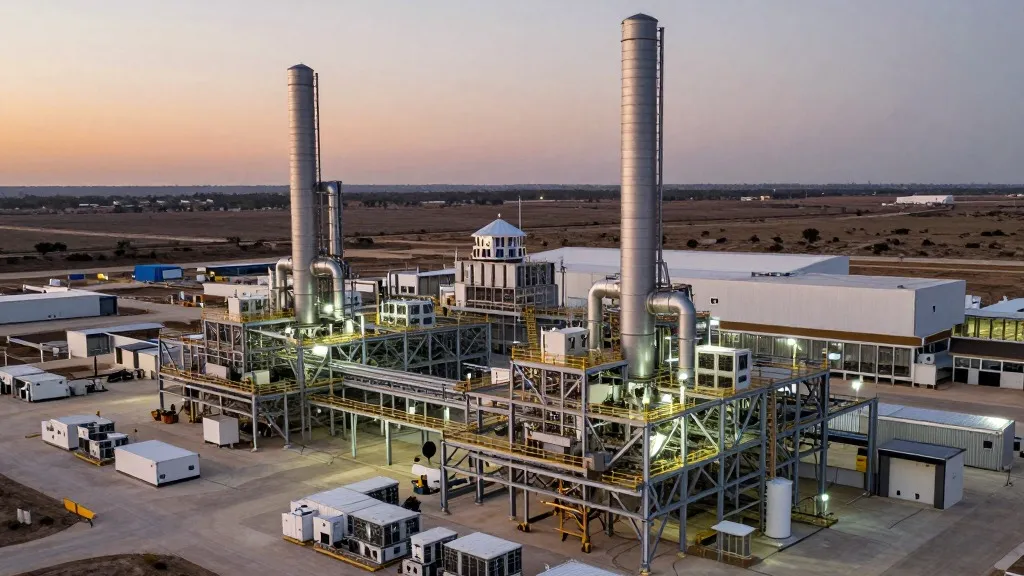
Terafab is a planned, multi-billion-dollar, vertically integrated chip factory in Texas designed to produce 1 terawatt of AI computing power per year. It would fabricate logic, memory, and advanced packaging in one location, using extreme ultraviolet lithography systems built on Intel's 14A manufacturing node. Intel joined the venture in April 2026 to help co-develop and refactor silicon fabrication technology, providing access to its 14A process. ASML, the only commercial supplier of the $400 million EUV machines needed for high-volume, leading-edge chip production, is a central partner. The first EUV tool for the project was reportedly slated for mid-2027, though it is unclear if that is the accelerated delivery Musk referenced. Other suppliers include Applied Materials, Lam Research, KLA Corporation, Tokyo Electron, and talks with about 10 South Korean equipment makers, including Hanmi Semiconductor and HPSP, plus firms providing specialized piping components and process valves.
Musk also laid out near-term plans for AI capacity, saying he expects 2.5 to 3 gigawatts of computing active by the end of 2026 and expressing confidence about adding 10 GW in 2027, which would put the total near 13 GW by the end of that year. To reach that figure, SpaceX and xAI are buying next-generation Nvidia hardware, with plans for a 440,000-GPU Nvidia Vera Rubin training cluster online by the end of the second quarter of 2027. By comparison, the restructured 10 GW Project Stargate is expected to reach full capacity in the 2030s, as is Meta's 5 GW Hyperion.
The company behind Terafab says that once the facility is fully scaled, the value of its chip output would rank among the top 20 country GDPs from a single building. The 20th country on that list is Switzerland, at roughly $1.14 trillion in GDP. The facility would supply chips for xAI clusters, self-driving vehicles, Optimus humanoid robots, and SpaceX's orbital AI data center, as well as the wider AI industry. However, some experts have questioned the feasibility of the 1 terawatt goal. Research firm Gartner estimates total global AI-optimized data center capacity at about 44 GW as of late 2026, which would be 4.4% of Terafab's planned output. EpochAI data shows global AI computing capacity has grown roughly 3.3x to 3.4x per year since 2022.
The project's scale has required coordination across the chip supply chain, and Musk's comments indicate that several suppliers are moving up delivery schedules even as capacity remains tight. The facility aims to reduce future shortfalls of advanced AI processors from outside foundries such as TSMC. The next step for Terafab is meeting the equipment delivery schedule and hitting the experimental test chip milestone in Austin around the second quarter of 2027, ahead of any volume production in Gibbons Creek.
Musk's account of speeding up equipment deliveries drew skepticism from some readers, who noted that ASML has long operated with a backlog of EUV machines and that its production is typically sold out, making it hard to move up orders unless another customer gives up a slot. The tight supply situation and the ambitious production dates leave questions about whether the 2028 target can be met as planned.
Source: Tom's Hardware